Showing posts with label Italian. Show all posts

Wednesday, September 26, 2012

Pancetta Gnocchi

This is a twist on an old family recipe. Gnocchi was a favorite meal of my grandpa, Walter Rozanski, who is pictured below making it. His daughter, my aunt Rita, requested that I figure out how to make bacon gnocchi, and this recipe was born.


(On an unrelated note, I just discovered where my nose comes from!)

Gnocchi ingredients:

2 medium potatoes
1 egg
1 1/2 cups flour
1/2 cup grated Romano cheese
1/2 pound pancetta (Italian bacon)

Alfredo sauce ingredients:

Fat from cooking pancetta
1 T butter
3 cloves garlic, minced
1/4 cup dry white wine
1 1/2 T flour
1 cup milk
1/2 cup grated Romano cheese
1/2 cup grated asiago cheese
1 t black pepper

Peel, cut, and boil potatoes until soft and easily mashed. On my stove, this took 25 minutes from the start with hot water. Drain water and mash potatoes until smooth. Stir in 1/2 cup grated Romano cheese. Set bowl in refrigerator until cool.


While potatoes are cooling, dice pancetta and sauté on medium-high heat until crispy. Remove pancetta, reserving juice/fat in pan. Set this aside for sauce. Let cooked pancetta cool for a few minutes, then mince/crush until there are no large chunks of meat.


Remove potatoes from refrigerator. Add egg, mixing well with a spoon. Add flour and mix well. Add pancetta last, mixing well.

Fill a large pan half full with water and a few dashes of salt and put on the stove to boil at this point.

Spread some flour on a table or cutting board to prevent dough from sticking. Knead gnocchi minimally until it is a uniform ball of dough. Cut this ball into four pieces. Take one quarter of the dough at a time and roll into a long snake of dough. Using a sharp knife, slice dough into pieces 1 inch wide or less. Take each piece individually and roll on a fork so the sides are grooved. Place gnocchi on a plate to rest while making remaining gnocchi.

When your plate is full and water is boiling, drop the plateful of gnocchi into boiling water and set a timer for five minutes. More gnocchi can be rolled out and sliced while the first batch is cooking. After five minutes, remove gnocchi from water with a slotted spoon and leave to drain in a colander.

Continue above steps until all dough is used and all gnocchi is cooked. Drain water and use the same pan for the sauce. Use a rubber spatula to drain the fat from cooking the pancetta from the frying pan into the larger pan. Heat this fat and one tablespoon butter on medium heat. When butter is melted, add minced garlic and saute for a few minutes, stirring often to prevent burning. After a few minutes, add wine and cook for a few more minutes, again stirring often. Add flour and use a wire whisk to mix well, making a rue. Cook only for a minute or two, stirring almost constantly to prevent burning.

Add milk, again using wire whisk to mix well. Continue cooking and stirring often until sauce starts to thicken. Add cheese about 1/3 cup at a time, mixing until melted. Add pepper last. Stir in cooked gnocchi to coat with sauce. If gnocchi has cooled, cook until warm.


This recipe serves four to six people and goes well with pinot grigio. I think this is one of the tastiest recipes I've ever made, and I plan to make it often in the future.

Monday, February 13, 2012

Nonna's Chicken Cacciatore with Polenta and Green Beans

In honor of my Italian grandma's 90th birthday yesterday, today I learned how to make my great-grandmother's (Nonna) chicken cacciatore, polenta, and green beans. Nonna (Margaret) was born just north of Venice, Italy, in 1900, and came to the the United States in 1905. This was a standard meal that she and my grandma Ollie made often.

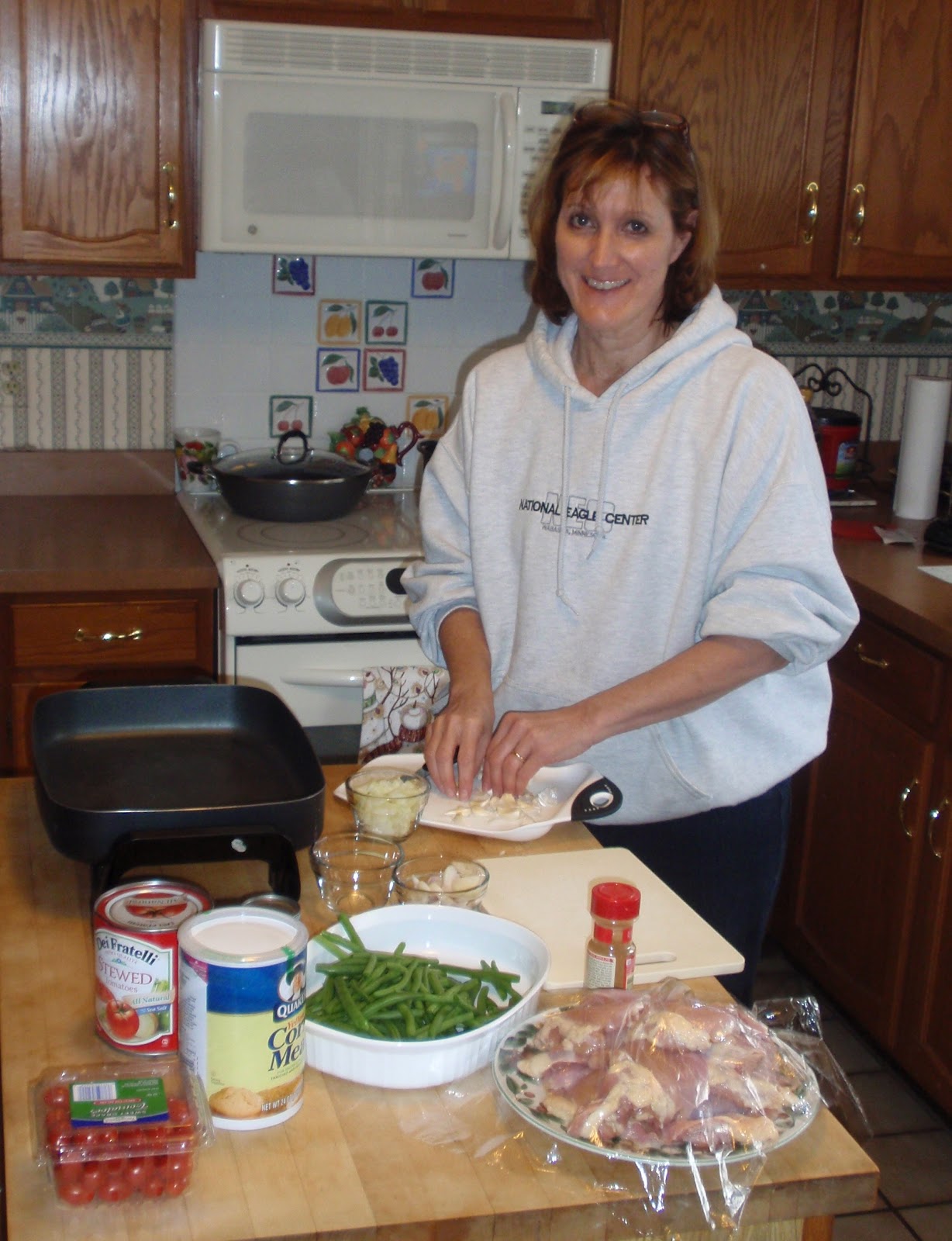
My birthmother, Mary, getting ingredients ready.

Chicken Cacciatore ("Hunter's chicken")

Ingredients:

8-12 chicken thighs
Olive oil
1/2 white onion (chopped)
1 small bulb of garlic (peeled and chopped)
1 28-oz. can stewed tomatoes
1 8-oz. can tomato sauce
Rosemary, thyme, and sage to taste, or poultry seasoning.

In a hot skillet (400 degrees if you have an electric skillet), add a few tablespoons of olive oil.

About this much...
Add garlic and onion and sauté until soft. Add chicken and brown both sides.

When chicken is browned but not cooked all the way through, add stewed tomatoes and tomato sauce. Add a few tablespoons of chopped fresh rosemary, thyme, and sage, or a few teaspoons of poultry seasoning if you do not have fresh herbs. Reduce heat to low (200 degrees if you are using an electric skillet), cover, and let cook for about 25-45 minutes (25 if you have boneless meat, 45 if there are bones).


While this is cooking, make the polenta and green beans.

Nonna's green beans

Ingredients:

1/2 pound fresh green beans
3 shallots (chopped)
2 T butter
2-3 T olive oil
1/4 t cinnamon
Salt & pepper to taste
1 t tomato paste
1/2 cup water

In a shallow microwaveable dish, add green beans and a 1/2 inch of water and microwave for two minutes. In the meantime, melt butter in a skillet and add olive oil and shallots. Sauté shallots until just starting to brown. Add green beans, cinnamon, and a few dashes of salt and pepper. Turn heat to low and cover, allowing to cook until the green beans are your desired crunchiness. Dissolve tomato paste in the 1/2 cup of water, and add this in the last few minutes of cooking.

Nonna's polenta

Ingredients:

Water
2 cups cornmeal
1 1/2 t salt

Before starting polenta, butter a large, shallow platter in preparation for the end of this recipe when you won't have an extra hand to do it. Nonna used a large wooden platter that did not need to be buttered. A very large wooden cutting board will also work.

Bring 4 1/2 cups water and salt to a boil. While waiting for the water to boil, add 1 1/2 cups cold water to the cornmeal, mixing until there are no lumps. Add this mixture to the boiling water, turn the heat down to low, and stir constantly for 5-20 minutes (depending on the quality of the cornmeal). Tradition dictates that you should be stirring the polenta with a wooden spoon.


When the polenta is very thick, but not thick enough to be pulling away from the sides of the pan, remove from heat and pour immediately onto platter or cutting board. Shape with a spatula or a damp kitchen towel so you have a nice round patty of polenta.


Let cool for 5-10 minutes until the polenta is firm enough to slice easily. Using a sharp knife, cut into slices like a pizza. Use a pie server to remove slices from the platter so they still look pretty.


By this time, the chicken cacciatore and the green beans should be done cooking. Serve the polenta with some of the sauce and tomatoes from the green beans and chicken.


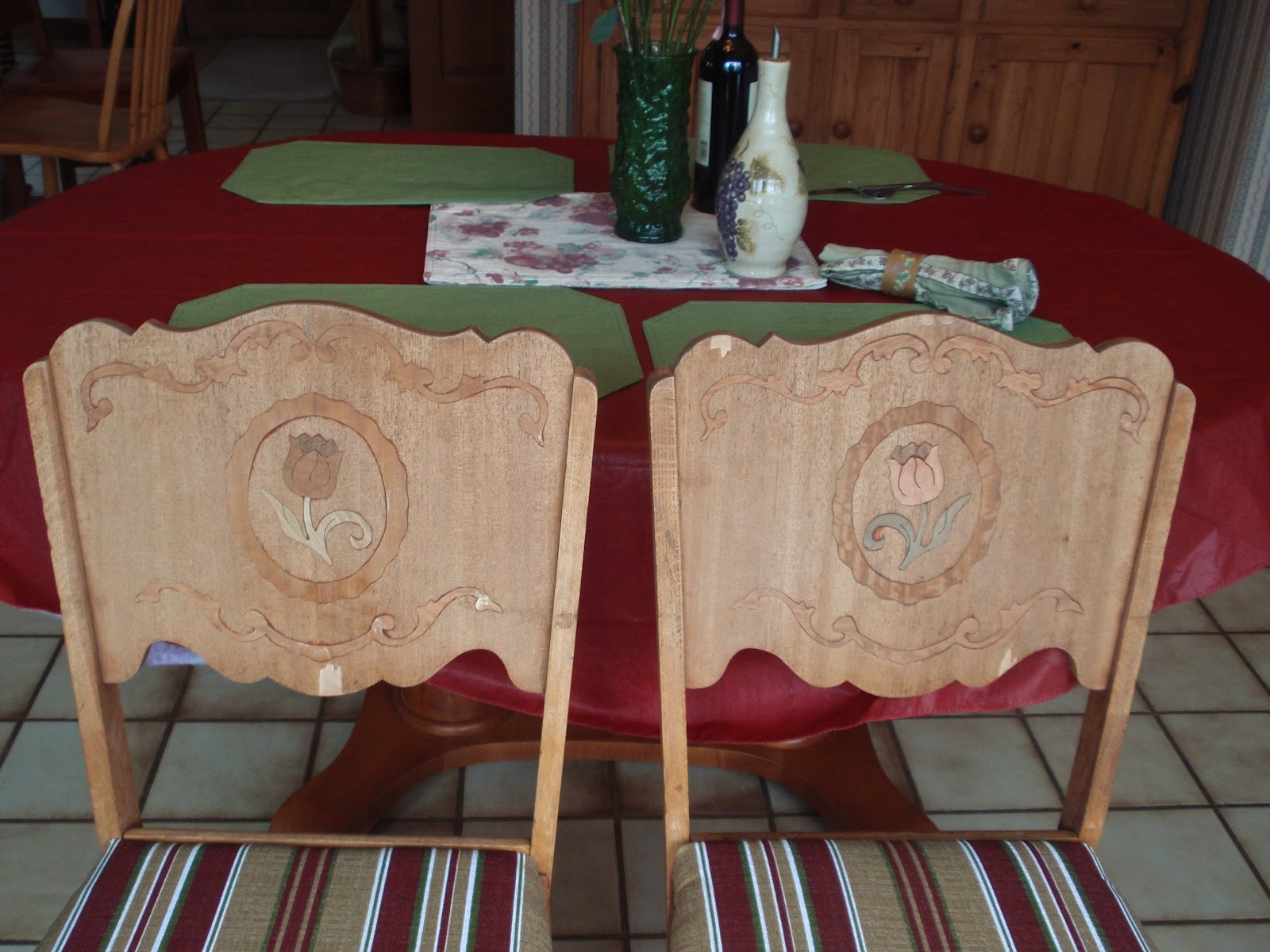
As we were about to sit down to lunch, we realized today that we were eating Nonna's favorite meal on the old chairs from her kitchen. It seemed very appropriate for the occasion.

Nonna's chairs
Buon appetito!

Saturday, February 11, 2012

Triple Chocolate-Cherry Biscotti

It's getting late, so this will be short - I'm driving to Chicago in the morning to help the writer of The Shepwell Kitchen (http://shepwellkitchen.blogspot.com/) shop for a wedding dress! I had a stressful day of doctors' appointments, tests, and shortness of breath (verdict: bronchitis), so I was in need of some serious kitchen therapy by the time I got home. Here is the amazingness I created.


Ingredients:


2 cups all-purpose flour
1/2 cup unsweetened cocoa powder
1 t baking soda
1 t salt
1 stick unsalted butter, room temperature
1 cup sugar*
2 eggs
1 t vanilla
1/2 cup semi-sweet chocolate chips
1/2 cup dark chocolate chips**
1/2 cup dried cherries, chopped


*I used organic, unrefined Demerara sugar for the first time and am happy with the results.
**I used Ghirardelli 60% dark chocolate chips.


Preheat oven to 350 degrees.


Whisk together flour, cocoa powder, baking soda, and salt in a bowl. Cream sugar and butter together in a large bowl. Add eggs one at a time, mixing between. Add vanilla. Add flour mixture slowly, mixing in small amounts until all dry ingredients are mixed in.


In a separate bowl, combine chocolate chips and chopped cherries until mixed well. Add to dough and fold together using your hands or a large spatula until chips and cherries appear uniformly mixed throughout the dough. Cut dough in half. Line a large baking sheet with parchment paper (I finally broke down and bought some when I realized how cheap it was). Form two logs on the parchment paper from the two halves of dough.

*Insert immature yet obvious joke here*
Bake at 350 degrees for about 35 minutes. After loaves are removed, drop the oven temperature to 300 degrees. Let cool on baking tray for 5-10 minutes before sliding onto a baking rack to cool, still on the parchment paper. After 30-45 minutes out of the oven, slide parchment paper and loaves onto a cutting board. Using a very sharp knife, carefully cut loaves into 1-1/2" slices. Spread on large baking sheet on a clean piece of parchment paper. 


Can I eat it yet?


Bake at 300 degrees for 15 minutes, remove from oven, flip all pieces over (carefully or they might break!), and bake for 15 more minutes. Remove from oven and let cool on baking tray until pieces feel hard enough and cool enough to easily move to a rack. I plan to leave mine out to cool overnight to make sure they are nice and stale and hard, perfect for dipping in coffee. This is not recommended if you have an ant problem in your house.

I can't WAIT to eat some of these for breakfast tomorrow!

Sunday, February 5, 2012

Biscotti Attempt #1

I have been meaning to attempt to make biscotti for a long time, and finally went for it yesterday. It was a cloudy, nasty day in Cleveland and I had no desire to go outside, which for me usually results in a GREAT day in the kitchen.

The biscotti was a bit of a disaster. I have swept my kitchen floor 4 times and am still feeling crumbs under my feet. The disastrous results, however, were user error, and not the recipe's fault. All I can say is wow, biscotti is difficult. At least 50% of this recipe ended up in the trash, but the other half is pretty good for a first try.

Preheat oven to 350 degrees.

Ingredients:

1 cup slivered almonds
2 cups sugar
1 cup (2 sticks) unsalted butter at room temperature
4 eggs
1/3 cup triple sec*
2 t anise extract
1 t vanilla extract
4 1/2 cups all purpose flour
4 t baking powder
1 t salt
1 egg white + 1 t water mixed in a small bowl for egg wash.

* The original recipe called for brandy, but I don't have it. I think whiskey would work too.
First thing, toast the almonds. Spread almonds in a thin layer on a baking sheet. Bake at 350 degrees for 20 minutes. While they are baking, you can mix the rest. Let almonds cool before adding to the dough.

Cream butter and sugar in a large bowl. Add eggs one at a time. Mix in triple sec, vanilla, and anise. Sift the flour, baking powder, and salt together, and add the dry ingredients slowly, mixing thoroughly (I had to switch from the mixer to a big spoon at this point. Add almonds , mixing enough that they are spread throughout the dough.

Cut the dough into four parts. This is definitely necessary; I know this because I only cut it in half, and this happened:
Oops.

If you make your loaves too big, they will crack, break, and be extremely difficult to deal with. So follow the directions. Make four long, skinny logs, two on each baking pan. They should be a few inches wide and have room to spread out as they bake. Brush the egg wash (egg white and water) on the top of the loaves, covering the whole thing. I actually found it easier to use my hands to spread the egg wash. Bake at 350 degrees for 35-40 minutes. Turn oven down to 300 degrees when you take the loaves out.

Be very careful removing your loaves from the pans. Most recipes say to use parchment paper on the trays, but how many of us have that in our kitchen? Let the loaves cool so they are barely warm or room temperature before slicing. Using a very sharp, non-serrated knife, cut 1-inch slices and lay out flat on a baking sheet. Don't make your slices too thin, or they will fall apart.


Bake your sliced biscotti at 300 degrees for 30-40 minutes, turning slices over every 10 minutes until they are beginning to brown. Let cool on a rack. Your biscotti will harden more as they sit out and cool. Once cool, store your biscotti in an air-tight container. Buon appetito!


References: My recipe was based on this recipe:

Sunday, January 22, 2012

Mushroom Risotto

This is one of my favorite recipes, adapted from my Italian grandmother's tomato risotto because I LOVE mushrooms.


4T salted butter
2T olive oil
10oz portabella mushrooms (1 package baby bellas)*
3.5 oz oyster mushrooms (you can leave these out if you want to save money)
Juice from 1/2 a small lemon
1/2 white onion, diced
2T parsley
4T pesto (see note below)
1 1/2 cups arborio rice
1/2 cup dry white wine**
4-6 cups chicken or beef broth
1/2 cup grated romano or parmesan cheese
Pre-cooked chopped or shredded chicken can be added at the very end.


*Please remember to wash your mushrooms, as they are often grown in manure.
**I prefer pinot grigio, but really any wine, red or white, will do. Red wine makes for ugly, gray rice though.


First, put the broth in a saucepan on low heat on a back burner of the stove to make sure it is warm by the time you need it. Don't let it boil.


Slice portabellas into thin slices lengthwise. Cut up oyster mushrooms as little as possible, sparing their pretty shape. Melt 2T salted butter in pan - use a skillet if you are planning on cooking in the slow cooker, or a large saucepan if planning on cooking your risotto using the traditional method. While butter is melting, toss mushrooms in a bowl with juice from half of a small lemon, being very careful to avoid accidentally adding lemon seeds. Sauté mushrooms in butter until soft, brown, and releasing their juices. Remove mushrooms and juices to a separate bowl, and toss with parsley and pesto.


At this point I'll let you in on an secret: I'm awful at making pesto, and I find it to be a time-consuming hassle for something that never tastes right anyhow. I tried for years, and I have given up. It doesn't help that I can't seem to keep indoor plants alive, so my attempts to grow basil at home have also failed miserably. So here's my secret: I use Knorr pesto packets in a lot of my recipes.


My ancestors are rolling over in their graves

I'm highly ashamed of this, but it tastes so much better than any pesto I've ever made, and it's cheaper than ready-made pesto in a jar. If you decide to take my easy way out, just dump in the whole pesto packet at this point. Set the bowl of mushrooms and spices aside for now.


In the same pan (don't bother washing it), melt 2T butter with 2T olive oil. Sauté onions until clear and soft, but not brown. Add rice and stir until coated. Add mushroom mixture and stir. Add wine and stir until most of the liquid has evaporated.

At this point, it's time to officially decide if you are going to be lazy or traditional. If you're feeling lazy, dump the contents of the skillet into your slow-cooker, add 4 to 4 1/2 cups broth all at once, put the slow cooker on high and go relax on the couch for the next 1 to 1 1/2 hours, until all the liquid has absorbed (peek at it after one hour to make sure it doesn't burn).


For the traditional cooking method, keep the broth on low heat on the stove in a separate pan throughout cooking. Add broth to rice mixture, 1/2 cup at a time, stirring until most of the liquid is absorbed before adding the next 1/2 cup of broth. I use a large ladle for this part, adding one ladleful at a time. Stir continuously, being careful not to pause for more than a few seconds or it will burn. Continue this until the rice is at your preferred consistency. Depending on the day, it can take more or less than 6 cups of broth. I always buy extra just in case.


When done cooking, stir in cheese while still hot. Many recipes also say to stir in 2T of butter at the end, but I find it just adds unnecessary calories. Today, I added about 2 cups of shredded Cornish game hen that I had frozen from Christmas dinner leftovers. Add salt and pepper to taste.